Adakah Teknologi AI membantu pelajar university atau sebaliknya?
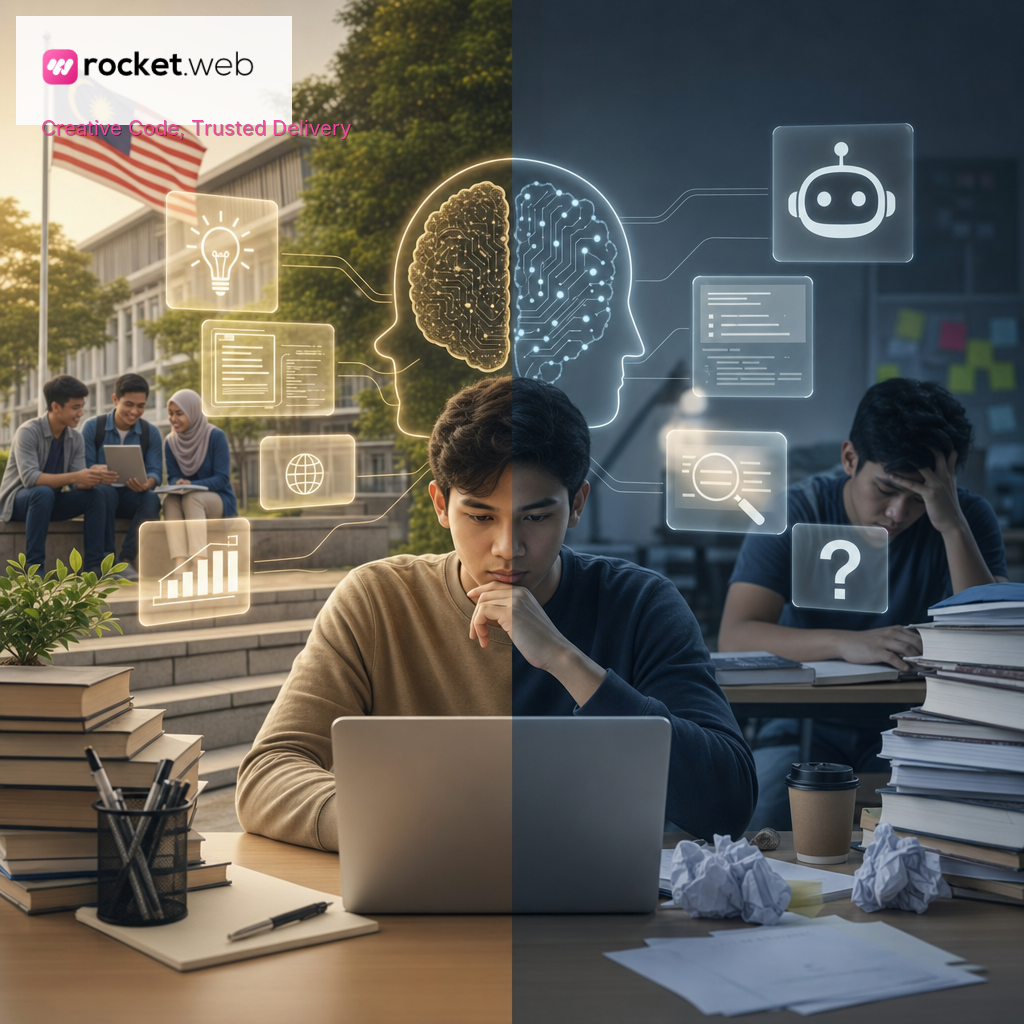
Yes — technology AI helps university students when it is used as a study assistant, not a substitute for thinking. In my experience working with digital teams and education stakeholders, AI improves research speed, writing clarity, and revision quality, but it can also weaken learning if students rely on it to do the work for them.
Short answer: AI helps when used with discipline
The real question is not whether AI is good or bad. It is whether students use it to strengthen understanding or to avoid effort. When used properly, AI can support note-taking, summarising readings, generating practice questions, and checking grammar. When used carelessly, it can lead to shallow learning, plagiarism risk, and weak critical thinking.
I have seen students gain real value from AI tools when they treat them like a tutor. For example, a student working on a business report can ask AI to explain a theory in simpler language, then compare that explanation with lecture notes and academic sources. That approach saves time without replacing learning.
Where AI genuinely helps university students
AI is most useful when it reduces repetitive work and gives students more time for analysis. In practice, the biggest benefits usually appear in five areas.
1. Faster research and idea generation
Students often spend hours trying to decide where to start. AI can help them brainstorm essay angles, create outlines, and identify keywords for academic searches. This is especially useful for final-year projects, where topic clarity matters before the real writing begins.
For example, a student preparing a presentation on digital transformation can ask AI for a structure covering definition, benefits, risks, and local examples. The student still needs to verify every point, but the starting point becomes much clearer.
2. Better writing support
AI can improve sentence structure, grammar, and readability. This is valuable for students who understand the subject but struggle to express ideas in polished English. It can also help with tone, especially for reports, reflective essays, and formal submissions.
That said, students should not let AI rewrite everything blindly. If the final text no longer sounds like the student’s own reasoning, the work becomes weaker academically and ethically.
3. Personalised revision
One of the strongest uses of AI is revision. Students can ask it to generate quizzes, flashcards, or mock interview questions based on lecture topics. This is far more effective than passive rereading.
In my view, this is where technology AI helps university students most clearly: it turns revision into active recall. A student studying finance can ask for a 10-question quiz on cash flow, then explain each answer out loud. That process builds retention.
4. Support for time management
University life is demanding. AI can help students break large assignments into smaller steps, estimate how long tasks may take, and create study schedules. This is practical for students balancing classes, part-time jobs, and internships.
For instance, a student with three deadlines in one week can use AI to map out a realistic plan: research on Monday, outline on Tuesday, draft on Wednesday, and editing on Thursday. The value is not automation alone; it is better decision-making.
5. Accessibility and confidence
AI can also help students who need extra support, such as those improving academic English or managing learning differences. It can explain difficult concepts in simpler terms, translate short phrases, or offer alternative examples. Used responsibly, this can reduce anxiety and make learning more inclusive.
Where AI can hurt students
AI becomes a problem when it replaces effort instead of supporting it. The risks are real, especially in higher education where independent thinking is part of the outcome.
1. Weak understanding
If a student copies AI-generated answers without reading or thinking, the assignment may look acceptable but the learning is incomplete. This becomes obvious during presentations, viva sessions, or exams when the student cannot explain the content.
2. Plagiarism and academic integrity issues
Many students assume AI-generated text is automatically safe to submit. It is not. Universities increasingly use policies, detection tools, and human review to assess originality and misuse. Students must understand citation rules, institutional guidelines, and the difference between assistance and substitution.
3. Dependence on shortcuts
Over time, constant AI use can reduce confidence in writing, problem-solving, and memory. I have seen teams in corporate settings become too dependent on automation, and the same risk applies to students. If every answer comes from a tool, independent judgment weakens.
4. Inaccurate or fabricated information
AI can sound convincing even when it is wrong. It may produce outdated facts, incorrect references, or oversimplified explanations. Students who do not verify sources may submit confident but inaccurate work.
My practical rule is simple: if AI gives you an answer, treat it as a draft, not a fact. Verify it with lecture notes, textbooks, journal articles, or official university resources before using it.
How students should use AI the right way
The safest and most effective approach is to use AI as a support system. Based on what works in real projects, I recommend a simple workflow.
- Start with your own understanding. Read the lecture notes or assignment brief first.
- Ask AI for structure, not final answers. Use it to brainstorm, outline, or simplify concepts.
- Check every important fact. Confirm claims with trusted academic or official sources.
- Rewrite in your own voice. Make sure the final work reflects your reasoning.
- Use it for practice. Generate quizzes, summaries, and mock questions to test understanding.
This approach keeps AI useful without damaging academic performance. It also prepares students for the workplace, where AI literacy is becoming a practical skill across industries.
What universities should do
Universities should not respond to AI with fear alone. They need clear policy, training, and assessment design. In my experience, the best institutions do three things well: they define acceptable use, they teach students how to use AI responsibly, and they redesign assessments to test reasoning rather than simple recall.
For example, oral defence, case-based assignments, and reflective tasks are harder to fake than generic essays. These methods encourage real learning while still allowing students to use AI as a productivity tool.
My conclusion: AI is neither saviour nor threat
Technology AI helps university students when it improves understanding, speed, and confidence. It becomes harmful when it replaces effort, weakens integrity, or creates false confidence. The outcome depends less on the tool and more on the discipline of the user.
If students learn to question, verify, and apply what AI produces, they gain a real advantage. If they use it to avoid thinking, the short-term convenience will cost them in the long run. In higher education, the goal is not just to finish assignments — it is to build capability that lasts beyond graduation.
For students, lecturers, and university leaders, the right mindset is clear: use AI to enhance learning, not to outsource it.
Frequently Asked Questions
Can university students use AI for assignments?
Yes, but only within your university’s academic integrity rules. Use AI for brainstorming, outlining, and editing support, then verify sources and rewrite in your own words.
Does AI improve student learning?
It can improve learning when used for practice, revision, and explanation. It becomes less effective if students rely on it to produce final answers without understanding the material.
What are the risks of using AI in university?
The main risks are plagiarism, inaccurate information, and overdependence. Students should always check facts and use AI as a support tool, not a replacement for study.
How can students use AI responsibly?
Start with your own notes, ask AI for structure or clarification, then confirm all important points with trusted academic sources. Use it to test knowledge, not to avoid learning.
- Hits: 137